

If you have ever paused while typing the word “baton,” you are not alone. Many people write “batton” by mistake. It looks like it could be right because of how it sounds. But only one of these spellings is correct in standard English.
This guide clears up the confusion. You will learn the correct spelling, the real meaning, common mistakes, and simple tips to remember it forever.
Quick Answer
The correct spelling is baton, not “batton.”
“Batton” is not a real word in standard English dictionaries. It is simply a common misspelling caused by how the word sounds when spoken.
| Word | Correct? | Meaning |
| Baton | Yes | A stick or rod used in relay races, music conducting, or by police |
| Batton | No | Misspelling of baton, not a valid word |
Whenever you are unsure, just remember this one rule: one “t,” not two.
Batton vs Baton Meaning
Baton has a few different meanings, and all of them relate to a stick-like object.
In sports, a baton is the short stick that runners pass to each other during a relay race. In music, a baton is the thin stick a conductor holds and waves to lead an orchestra or choir. In law enforcement, a baton is a stick or club that police officers sometimes carry for protection or crowd control.
“Batton,” on the other hand, has no meaning at all. It does not appear in any major dictionary, including Merriam-Webster, Oxford, or Cambridge. People use it purely by accident, often because they are typing quickly or guessing the spelling based on sound.
Batton vs Baton Difference
The difference is simple: one word is correct English, and the other is not.
Here is a clear breakdown to help you spot the difference right away:
- Baton – correct spelling, used in dictionaries, newspapers, and formal writing
- Batton – incorrect spelling, never appears in proper English text
- Sound – both words sound almost the same when spoken aloud
- Origin – baton comes from French, while “batton” has no real origin because it is not a genuine word
Because the two words sound alike, spell checkers sometimes miss the error, especially in casual writing or messaging apps. This is why visual memory of the correct spelling matters more than relying on sound alone.
Grammar Rule Depth
English has a general pattern where doubling a consonant can change how a word is pronounced or how it looks. This pattern is part of why “batton” feels tempting to write.
In many English words, doubling the middle consonant happens after a short vowel sound, especially in words like “button,” “cotton,” or “mitten.” Since “baton” sounds a little like these words, people copy the same pattern by mistake.
But the baton does not follow that rule. It comes from a French word and keeps a French-style spelling, with just one “t.” This is a good reminder that not every English word follows the same internal pattern, especially borrowed words.
| Similar Sounding Word | Correct Spelling | Reason |
| Button | Button (double t) | English pattern, short vowel before final syllable |
| Cotton | Cotton (double t) | Same English pattern |
| Baton | Baton (single t) | Borrowed from French, does not follow the pattern |
Once you understand this exception, the spelling becomes much easier to recall.
The Origin of Baton

The word baton comes from French, where it originally meant a stick, staff, or club. It traces further back to the Old French word “baston,” which itself came from Latin roots connected to sticks and rods.
English adopted the word centuries ago, and it kept its simple, single-“t” spelling from French. This is common in English, since the language borrows heavily from French, especially for words related to military, law, music, and formal ceremonies.
Over time, baton picked up several specific meanings depending on the field it was used in. A conductor’s baton, a police baton, and a relay baton all share the same root idea: a handheld stick used for a specific purpose, whether guiding, striking, or passing along.
Why People Make This Mistake
There are a few clear reasons why “batton” shows up so often, even among careful writers.
- Sound-based guessing – the word sounds like it could have a double “t,” similar to button or cotton
- Autocorrect gaps – some spell checkers do not always catch this error, especially in fast typing or texting
- Visual memory confusion – readers may recall seeing similar double-consonant words and apply that pattern here by mistake
- Lack of exposure – baton is not a word most people write often, so the correct spelling does not always stick in memory
Understanding why the mistake happens is often the first step toward fixing it for good.
Real World Usage of Baton
Baton appears often in news, sports commentary, music reviews, and even legal or police reports. Because it spans several industries, seeing it used correctly in real contexts can help reinforce the right spelling.
Sports journalists often describe relay race moments using phrases about passing the baton smoothly or dropping it during a handoff. Music critics describe conductors lifting their baton to begin a performance. News reports about protests or crowd control sometimes mention police using batons for safety.
Because the word touches so many different fields, it has a wide presence in written English. This also means the correct spelling matters for clarity and professionalism, especially in journalism, sports writing, or official documents.
Baton in Everyday Examples
Seeing the baton used in full sentences makes the correct spelling much easier to remember.
- The runner nearly dropped the baton during the final lap.
- The orchestra conductor raised her baton to signal the start.
- Police officers carried batons during the parade for safety.
- He passed the baton to his teammate without losing speed.
- The relay team practiced their baton handoff for weeks.
Each of these examples shows baton fitting naturally into different situations, from sports to music to safety equipment.
Common Mistakes with Batton vs Baton
Beyond simple spelling, there are a few other errors people make when using this word.
| Mistake | Correction |
| Writing “batton” instead of “baton” | Always use one “t” |
| Confusing baton with “button” | These are unrelated words with different meanings |
| Confusing baton with “baton rouge” spelling | Baton Rouge, a US city, also uses single “t” spelling |
| Using “batons” incorrectly in plural form | The plural is simply “batons,” also with one “t” |
Recognizing these small mix-ups helps you avoid embarrassing errors in resumes, articles, or professional writing.
Baton in Different Contexts
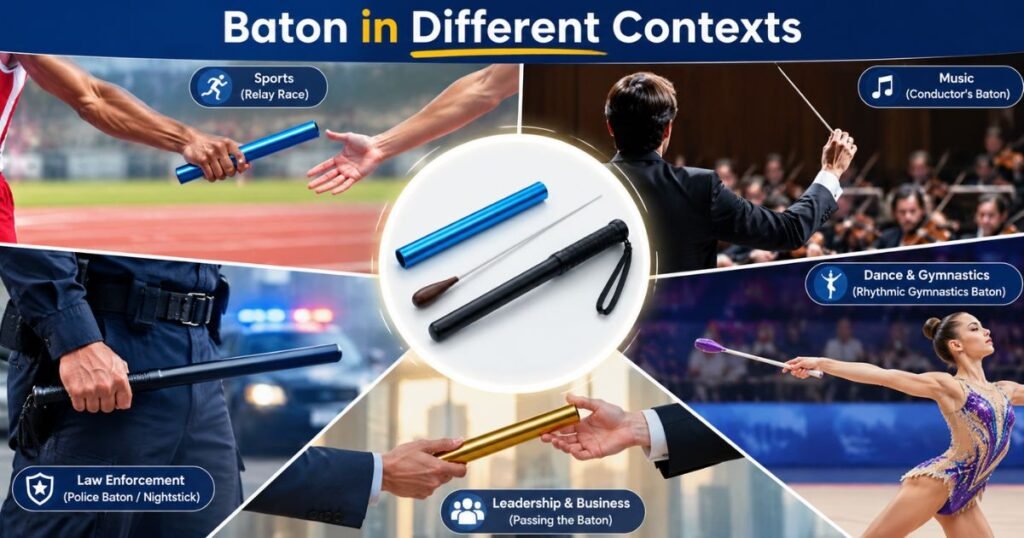
The meaning of baton shifts slightly depending on where it is used, even though the spelling never changes.
In sports, baton refers to the lightweight tube passed between runners in relay events like the 4x100m or 4x400m races. Speed and grip during the handoff often decide whether a team wins or loses.
In music, baton refers to the conductor’s stick, usually made of wood or fiberglass, used to guide tempo, rhythm, and expression during a performance.
Also Read This: Heros or Heroes
In law enforcement, baton refers to a defensive tool, often made of metal or hard plastic, used by police or security personnel for protection and crowd control.
Even though the object looks different in each field, the core idea remains the same: a stick used to guide, pass along, or protect.
Related Words and Similar Terms
A few other words are closely related to baton or often confused with it. Knowing these can help you avoid mixing them up.
- Batons – plural form of baton, still spelled with one “t”
- Baton twirling – a performance art involving spinning a baton, often seen in parades
- Baton Rouge – the capital city of Louisiana, spelled the same way as the object
- Button – a completely different word, referring to a fastener on clothing or a control on a device
- Bat – a shorter, unrelated word referring to a flying mammal or sports equipment
Keeping these related terms in mind can help reduce confusion when writing quickly.
Tips to Remember the Correct Spelling
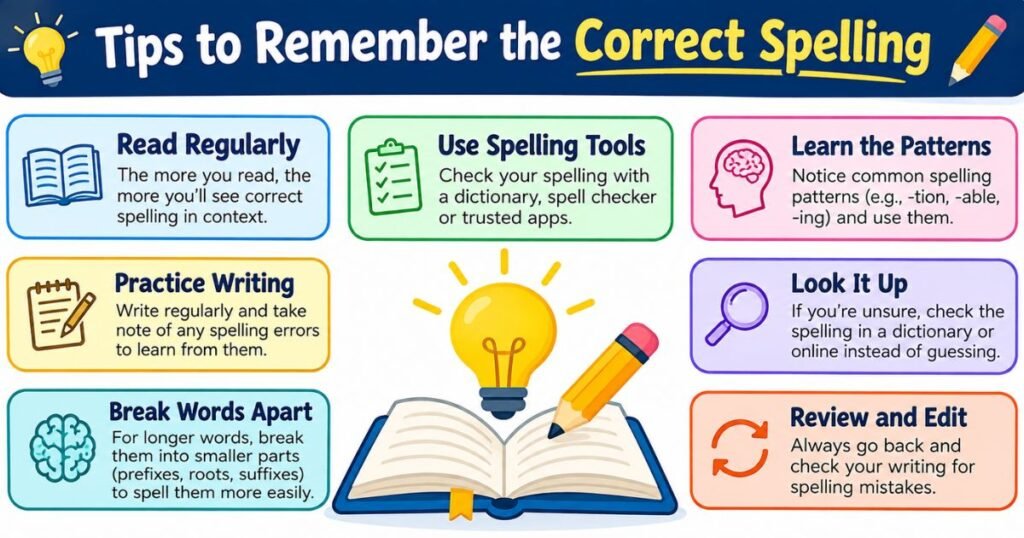
A few simple memory tricks can help you never misspell this word again.
- Think of the French origin: French words often use a single consonant where English might double it.
- Remember the phrase “one stick, one t,” since baton refers to a single stick-like object.
- Compare it to “baton” in Baton Rouge, a well-known city name that many people already spell correctly.
- Practice writing the word in full sentences a few times until it feels natural.
- Avoid relying only on sound, since “batton” sounds almost identical when spoken aloud.
With a little practice, the correct spelling becomes automatic.
Usage Trends
Baton is a moderately common word, appearing regularly in sports journalism, music writing, and news coverage of public safety. It is not an everyday word for most people, which explains why spelling mistakes happen so often.
Search data consistently shows that many people type “batton” into search engines, only to be redirected to pages explaining the correct spelling, which is baton. This pattern shows the mistake is widespread, not just an occasional slip.
Because of this steady searching pattern, understanding the correct spelling is genuinely useful, whether you are a student, a writer, a coach, or a music teacher. Getting it right adds a small but real touch of professionalism to your writing.
Exercise 1 Choose the Correct Word
Choose the correct spelling in each sentence below.
- The runner grabbed the (baton / batton) and sprinted forward.
- The conductor tapped his (baton / batton) gently before the music began.
- Security guards carried (batons / battons) during the event.
- She dropped the (baton / batton) during practice yesterday.
- The city of (Baton / Batton) Rouge is located in Louisiana.
Answer key: baton, baton, batons, baton, Baton
Exercise 2 Correct the Sentence
Rewrite each sentence below using the correct spelling.
- He handed the baton to his teammate without stopping.
- The orchestra leader raised her batton high in the air.
- Police officers used battons to control the crowd safely.
- The relay team practiced their batton pass every morning.
- She bought a new batton for the marching band competition.
Corrected versions:
- He handed the baton to his teammate without stopping.
- The orchestra leader raised her baton high in the air.
- Police officers used batons to control the crowd safely.
- The relay team practiced their baton pass every morning.
- She bought a new baton for the marching band competition.
Conclusion
The correct spelling is always baton, never “batton.” This small mistake is common, but it is easy to fix once you understand why it happens and how to remember the right form.
Whether you are writing about sports, music, or public safety, using the correct spelling shows attention to detail and strengthens your writing. With the tips, examples, and exercises in this guide, you now have everything you need to spell it correctly every time.

Mubeen is a passionate writer who shares simple and practical English grammar, vocabulary, and writing tips at ScoopVisly.