

More people are talking about mental health, stress, and emotional well being than ever before, and with that comes new language. One word shows up again and again in therapy sessions, parenting advice, and social media posts: regulated.
But you may have also seen it written as “disregulated,” and wondered which one is actually right. This small spelling difference matters more than it looks, especially if you are writing for a blog, a school paper, a medical note, or even just a text to a friend.
This guide clears up the confusion once and for all. You will learn the real meaning behind the word, why the mix-up happens so often, and how the term is used across psychology, medicine, parenting, and everyday conversation. By the end, you will know exactly which spelling to use and why it matters.
Quick Answer
The correct word is dysregulated, not disregulated. It means something is not working the way it should, usually because a system, process, or emotional response has lost its normal balance.
“Disregulated” is a common misspelling. It shows up often in casual writing and social media, but it has no accepted place in dictionaries or formal English. If you want to sound accurate and professional, always choose dysregulated.
Disregulated vs Dysregulated Meaning
Dysregulated comes from the prefix “dys,” which means bad, faulty, or abnormal. Add it to “regulated,” and you get a word that describes something whose normal control or balance has broken down. It is used a lot in psychology, medicine, and biology to describe systems that are not functioning smoothly.
Disregulated tries to do the same job, but it uses the prefix “dis,” which usually means the opposite of something, or the removal of something. “Disregulated” would technically suggest regulation has been removed entirely, rather than simply thrown off balance. This is not how English speakers actually use the term, so the spelling never gained real acceptance.
Here is a simple side-by-side look:
| Word | Prefix Meaning | Standard Usage | Found in Dictionaries |
| Dysregulated | dys = bad, faulty | Widely used and correct | Yes |
| Disregulated | dis = opposite, removal | Rarely used, seen as an error | No |
Disregulated vs Dysregulated Difference
The biggest difference between the two words is simple: one is correct, and one is not. Dysregulated is the accepted, standard spelling used in psychology journals, medical textbooks, and everyday writing. Disregulated is a spelling mistake that happens because “dis” is a more familiar prefix to most English speakers.
Another difference is how each word feels to a reader. Dysregulated sounds professional and precise. Disregulated can make writing look careless, especially in academic papers, resumes, or health related content, where accuracy really matters.
- Dysregulated: correct spelling, used in science and psychology
- Disregulated: common typo, avoided in formal writing
- Dysregulation: correct noun form
- Disregulation: incorrect noun form
The Origin of Dysregulated
The word dysregulated grew out of the older term “regulation,” which comes from Latin roots related to rules and control. Scientists and doctors needed a way to describe systems in the body or brain that were not following their normal rules. They added the Greek-based prefix “dys,” which already appeared in many medical terms like dysfunction, dyslexia, and dystrophy.
This pattern made dysregulation an easy fit inside medical and psychological language. It followed the same building blocks as other trusted, well known words. That consistency helped it spread quickly through academic writing starting in the late twentieth century, especially in mental health research.
Why People Write Disregulated Instead of Dysregulated
Most people who write “disregulated” are not trying to invent a new word. They are simply mishearing or misremembering the sound of “dys,” which is pronounced almost like “dis.” Since “dis” appears in so many common English words, the brain naturally reaches for the more familiar pattern.
There is also a visual reason. Words like disorganized, disconnected, and disorder all use “dis” to describe something broken or missing. It feels logical to assume dysregulated should follow the same pattern, even though it does not.
Common reasons for the mix-up include:
- Similar pronunciation between “dys” and “dis”
- Autocorrect tools sometimes failing to catch the error
- Influence from other “dis” words in English
- Lack of exposure to the word in written form
Dysregulated in Psychology
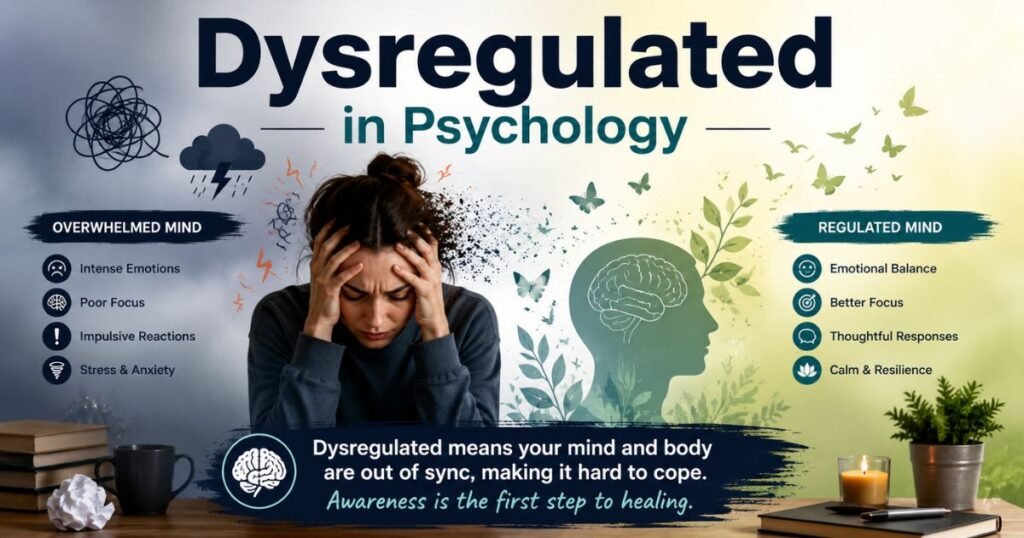
In psychology, dysregulation usually describes emotions, thoughts, or behaviors that are hard to manage. A dysregulated person might feel emotions that are too intense, too sudden, or too hard to calm down. This is different from simply feeling upset. It points to a struggle with returning to a steady emotional state.
Therapists often use the word when talking about anxiety, mood disorders, ADHD, and personality disorders. It helps describe patterns without immediately labeling a full diagnosis. A client might say, “I felt completely dysregulated after the argument,” meaning their emotional response spun out of their normal control.
Dysregulated in Medicine
Doctors use dysregulated to describe body systems that are not working in a balanced way. This can apply to hormones, blood sugar, the immune system, or the nervous system. A dysregulated immune response, for example, might attack healthy tissue instead of only fighting off illness.
This medical use is one reason the word carries weight and credibility. It is not just a trendy term. It has a long history inside clinical research and diagnosis, which is part of why the correct spelling matters so much in healthcare writing.
Dysregulated in Everyday Language
Outside of clinics and classrooms, dysregulated has become common in daily conversation. People use it to describe stress, overwhelm, or emotional overload. A parent might say their child seems dysregulated after a long day with no nap. A coworker might describe feeling dysregulated before a big presentation.
This everyday use has helped the word spread across social media, parenting blogs, and wellness content. It gives people a simple way to describe a state that feels bigger than just “upset” or “stressed.”
Real World Usage Examples
Seeing the word in real sentences makes the meaning much clearer. Below are examples across different settings.
- Therapy setting: “The client appeared dysregulated during the session, with rapid shifts in mood.”
- Parenting context: “My toddler gets dysregulated when he’s overtired.”
- Medical report: “Blood sugar levels remained dysregulated despite medication.”
- Workplace talk: “I felt dysregulated after back-to-back meetings all day.”
- Social media post: “Sometimes I just need quiet time when I feel dysregulated.”
Which Spelling Should You Use

Always choose dysregulated. It is the version accepted by dictionaries, style guides, medical journals, and psychology resources. Using disregulated in professional writing can make readers question your attention to detail, even if the meaning is still understood.
If you are writing content for health, therapy, education, or parenting audiences, dysregulated is the safer and more trustworthy choice. Search engines and readers both respond better to accurate spelling, especially in topics tied to wellness and medical information.
Common Mistakes with Disregulated or Dysregulated
Many writers make small errors around this word, even beyond the basic spelling issue. Being aware of these mistakes can help you avoid them.
| Mistake | Example | Correction |
| Wrong prefix | “He felt disregulated” | “He felt dysregulated” |
| Wrong noun form | “Emotional disregulation” | “Emotional dysregulation” |
| Overusing the word | Using it for mild moods | Save it for real imbalance |
| Mixing with “unregulated” | Confusing missing rules with poor control | Use the word matching the real meaning |
Dysregulated in Emotional Health
Emotional dysregulation is one of the most searched versions of this topic. It describes trouble managing emotional responses, especially strong ones like anger, sadness, or fear. People with emotional dysregulation may react more intensely than the situation calls for, or struggle to calm down afterward.
This idea is central to many therapy approaches, including dialectical behavior therapy. Learning to notice early signs of dysregulation can help people build coping tools before emotions become overwhelming.
Dysregulated in Child Development
Children are still learning how to manage their emotions, so dysregulation is a normal part of growing up. A dysregulated child might cry suddenly, have trouble calming down, or act out physically when overwhelmed. This does not always point to a deeper problem. It often reflects a developing brain still building emotional control.
Also Read This: Nosy or Nosey
Parents and teachers can support children by staying calm, offering predictable routines, and modeling steady emotional responses. Over time, most children build stronger regulation skills with guidance and practice.
Dysregulated in Trauma Discussions
Trauma can deeply affect how the nervous system responds to stress. People who have lived through trauma may become dysregulated more easily, even in situations that seem small to others. This happens because the brain’s alarm system can stay overly alert long after the original danger has passed.
Trauma informed care focuses on helping people recognize dysregulation and slowly rebuild a sense of safety. Simple tools like grounding exercises, breathing techniques, and steady routines can support this process.
Dysregulated in Neuroscience
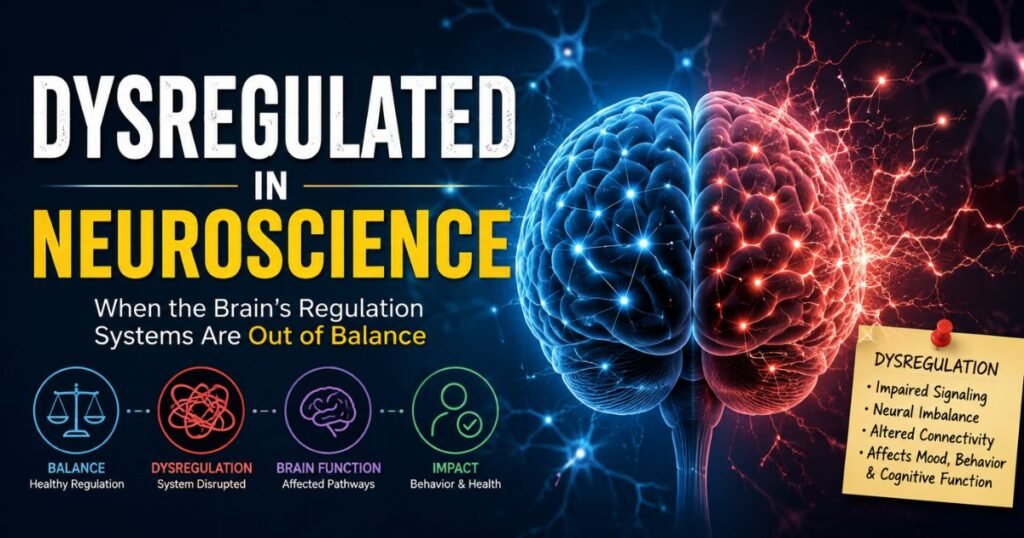
From a neuroscience view, dysregulation often relates to how the brain and nervous system respond to stress signals. When the body’s stress response stays switched on too long, or reacts too strongly, researchers may describe the system as dysregulated. This can affect sleep, focus, mood, and even physical health over time.
Understanding this brain-based side of dysregulation helps explain why calming techniques, like deep breathing or movement, can have a real, measurable effect on emotional state.
Related Words and Similar Terms
A few related words often appear alongside dysregulated. Knowing them can help you choose the right word for the right situation.
- Regulation: normal control or balance
- Unregulated: no rules or control exist at all
- Self-regulation: the ability to manage your own emotions or behavior
- Dysregulation: the noun form of dysregulated
- Overwhelmed: a related feeling, but not the same as clinical dysregulation
Why Dysregulated Became Popular
Over the past several years, mental health awareness has grown across social media, schools, and workplaces. As more people talk openly about emotional wellbeing, they need clear language to describe what they are feeling. Dysregulated fills that gap well because it sounds specific without requiring a full diagnosis.
Therapists, influencers, and educators helped push the word into mainstream use by explaining it in relatable, simple terms. This made a once clinical word feel accessible to everyday readers.
Dysregulated in Formal Writing
In academic papers, medical charts, and professional reports, dysregulated is the only accepted spelling. Editors and reviewers expect this standard form, and using disregulated in these settings can weaken the credibility of the writing.
Formal writing also tends to pair dysregulated with precise context, such as naming which system is affected. For example, writers might refer to “dysregulated cortisol levels” or “emotionally dysregulated behavior” rather than using the word alone.
Dysregulated in Social Media and Online Discussions
On platforms like Instagram, TikTok, and Reddit, dysregulated is often used more loosely than in clinical settings. People may describe everyday stress, tiredness, or frustration as feeling dysregulated. This casual use has helped the word spread quickly, though it sometimes stretches the original meaning.
Despite the casual tone, most online usage still respects the correct spelling. This has actually helped push disregulated further out of common use, since dysregulated dominates search trends and hashtags.
Usage Trends and Language Data
Search and usage data consistently show dysregulated far ahead of disregulated. Dictionaries, grammar checkers, and style guides list only dysregulated as valid. Search engine results overwhelmingly favor content using the correct spelling, which also affects how content ranks and reaches readers.
| Trend Area | Dysregulated | Disregulated |
| Dictionary listing | Present | Absent |
| Academic journals | Common | Rare or absent |
| Search engine ranking | Strong | Weak |
| Social media hashtags | Widely used | Rarely used |
Exercise 1 Choose the Correct Word
Pick the correct spelling to complete each sentence.
- After the stressful meeting, she felt completely ______ (dysregulated / disregulated).
- His hormone levels were ______ (dysregulated / disregulated) due to poor sleep.
- The toddler became ______ (dysregulated / disregulated) after skipping his nap.
- Emotional ______ (dysregulation / disregulation) is common after trauma.
- The therapist explained how the nervous system becomes ______ (dysregulated / disregulated) under chronic stress.
Answer key: All blanks should use dysregulated or dysregulation.
Exercise 2 Correct the Sentence
Rewrite each sentence using the correct spelling.
- “He seemed disregulated after the long flight.”
- “Her blood sugar has been disregulated for weeks.”
- “The child’s emotions felt disregulated all afternoon.”
- “Chronic stress can leave the nervous system disregulated.”
- “Their behavior became disregulated during the crisis.”
Corrected versions should replace every instance of “disregulated” with “dysregulated.”
Conclusion
Dysregulated is the correct word, and dis regulated is a common but incorrect spelling that should be avoided in careful writing. The confusion mostly comes from how similar “dys” and “dis” sound, but once you know the difference, it becomes easy to remember. Dysregulated describes a loss of balance or control, whether that is emotional, physical, or biological.
Using the right spelling matters, especially in psychology, medicine, education, and any writing meant to inform or support readers. Choosing dysregulated over disregulated helps your writing stay accurate, professional, and easy to trust.

Mubeen is a passionate writer who shares simple and practical English grammar, vocabulary, and writing tips at ScoopVisly.