

You’re typing an invitation, a deadline, or a birthday post, and you freeze. Is it 31st or 31th?Short answer: 31st is correct. 31th is a common spelling mistake, and no standard English dictionary lists it.The reason is simple. You read the number as thirty-first, so the st suffix follows the last digit rule. If a number ends in 1 (and isn’t 11), it gets st.
Maybe you’ve seen 31th in a text, a flyer, or even a news comment. Maybe you’ve wondered if it’s a British thing. It isn’t, and you’ll see why below.Stick around and you’ll get date examples, the story behind the rule, a cheat sheet for every ordinal number ending, and the mistakes worth avoiding. It takes about five minutes, and you won’t need to look it up again.
31st or 31th: Quick Answer
31st is the correct form. 31th is a spelling mistake.
Remember this one line: look at the last digit rule. If a number ends in 1 (and isn’t 11), it gets st. That works for 21st, 41st, 101st, and yes, 31st.
31st or 31th in Dates: Correct Usage Examples
Dates are where most people meet this question. Months with 31 days include January 31st, March 31st, May 31st, July 31st, October 31st, and December 31st.
August has 31 days too, so you’d write August 31st. Every one of these takes st, never th.
Here are a few correct usage examples you can copy:
- Correct: Your invoice is due on March 31st.
- Correct: We close the office on December 31st for the holiday.
- Correct: The application deadlines end on May 31st.
- Incorrect: The sale ends on July 31th.
You can also drop the ordinal entirely. “March 31” and “31 March” are both fine, and many writers prefer them because they look cleaner.
The Origin of 31st or 31th

To see why 31th feels tempting, you need a quick peek at Old English. Early English speakers built their ordinal number words from the cardinal ones, and most of them picked up a th sound along the way. Think fourth, fifth, sixth.
Three words broke away from the pack. First, second, and third kept their own odd shapes, and that’s why we write 1st, 2nd, and 3rd.
Now here’s the part people miss. For big numbers, only the last word changes. Thirty-one becomes thirty-first, not “thirty-oneth.” The written abbreviation simply borrows the final two letters of that word, so first becomes st and you get 31st.
That’s also why 31th feels wrong once you say it out loud. Nobody says “thirty-oneth.”
British English vs American English Spelling
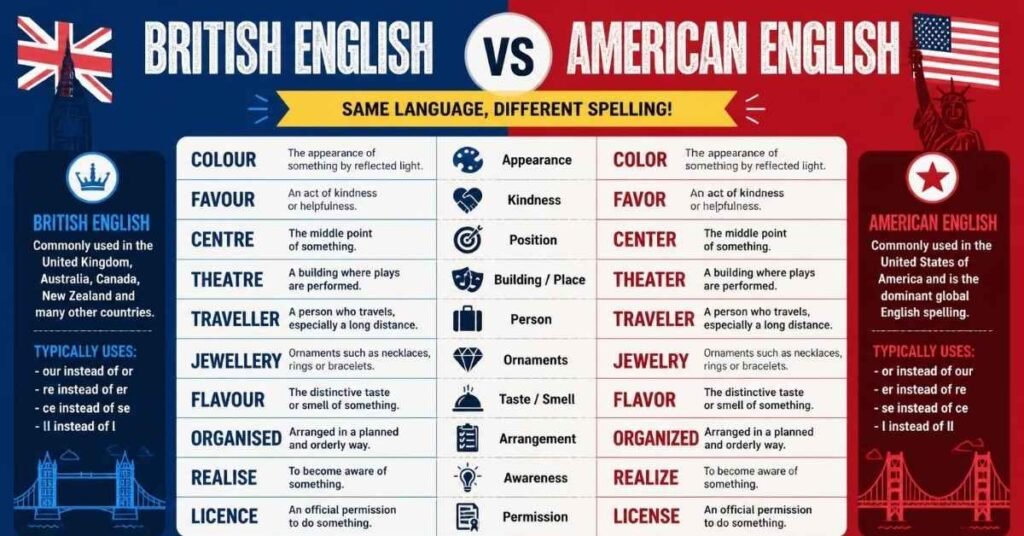
Here’s some good news. British English and American English agree on this one. Both write 31st, and neither accepts 31th.
What differs is the date notation. Brits usually put the day first, while Americans lead with the month.
That’s a regional spelling difference in layout, not in the ordinal itself. Think of it like driving on different sides of the road. The destination stays the same.
Comparison Table
| Feature | British English | American English |
| Ordinal ending for 31 | 31st | 31st |
| Common date order | 31st March or 31 March | March 31st or March 31 |
| Spoken form | “the thirty-first of March” | “March thirty-first” |
| Is 31th accepted? | No | No |
| Superscript style | 31ˢᵗ (optional) | 31ˢᵗ (optional) |
Which Form Should You Use?
Use 31st every single time. There’s no situation where 31th is the better pick, not in formal writing, not in texts, not in captions.
The real choice is between 31st and plain 31. Both are correct, so pick based on context.
Here’s a quick guide:
- Contracts and legal papers: Write “31 December 2026” to avoid any mix-up in contract dates.
- Invitations and speech: Go with 31st. It sounds natural.
- News and style guides: Many publishers drop the ordinal and write “Oct. 31.”
- Rankings: Use 31st place when you mean position.
When in doubt, stay consistent. Spelling consistency matters more than the style you choose.
Common Mistakes with 31st or 31th
Let’s look at where people slip up. Most common spelling mistakes here come from guessing instead of checking the last digit.
Spot yourself in this list? You’re not alone.
- 31th: The most frequent error. People default to th because most numbers use it.
- 31rd: Mixing it up with 3rd or 33rd. The number ends in 1, so it’s st.
- 31 st: An extra space. The letters should attach to the number.
- 31nd: Confusing it with 2 endings like 32nd.
- Thirty-oneth: Treating every part of the word as ordinal.
Here’s a quick story. A friend of mine, let’s call him Sam, once sent out a wedding invite with “December 31th” printed on 150 cards. He caught it only after the print run. Don’t be Sam.
Proofread dates twice, because incorrect ordinal forms slip past spellcheck more often than you’d think.
31st or 31th: Common Search Questions Answered
People ask the same things again and again. Here are the quick answers.
Is it 31st or 31th? It’s 31st.
Is 31th ever correct? No. It isn’t correct in American English, British English, or any other standard grammar usage.
How do you spell 31st in words? It’s thirty-first, with a hyphen between thirty and first.
Why isn’t it 31th like 4th? Because the last digit decides the ending, and 4 and 1 follow different rules.
Is 31 st with a space okay? No. Keep the number and ordinal abbreviation together.
31st or 31th in Everyday Examples
Theory is fine, but you probably want to see this in real life. Let’s walk through the places you’ll actually write it.
Each example below shows the right way and keeps things short.
Emails
In emails, clarity beats flair. Write “Please send the report by October 31st” and you’re done.
If your reader lives in another country, spell the month out. That avoids the 03/10 versus 10/03 mix-up.
News Writing
In news writing, space is tight. Most newsrooms shorten dates to “Oct. 31” with no ordinal.
You’ll still see 31st in feature stories and quotes. Follow your outlet’s style guide and stick with it.
Social Media
On social media writing, speed wins and typos multiply. Posts like “Counting down to my 31st birthday” look sharp when the ending is right.
Captions with 31th stand out for the wrong reasons. Give your post one last glance before you hit send.
Formal Writing
For formal writing and academic writing, aim for the cleanest format. “31 October 2026” works well in professional documents.
If you do use an ordinal, spell out small ones in running text and keep numerals for dates. Consistency is your friend here.
31st or 31th: Google Trends & Usage Data
Curious how people search this? Open Google Trends and type in both terms. You’ll see the story for yourself.
I won’t quote exact numbers here because they shift over time, and I’d rather not guess. What you can expect is that 31st shows up mostly beside dates and holidays, while 31th appears as a typo-driven search query.
You’ll likely notice spikes near the end of each month and around October 31st and December 31st. That makes sense, since people write these dates most when deadlines and celebrations arrive. Books, news archives, and professional documents also lean almost fully on 31st, which tells you where usage patterns really sit.
Comparison Table: Ordinal Number Endings
This table is your cheat sheet. Save it, screenshot it, or tape it to your monitor.
| Last digit | Ending | Examples | Exceptions |
| 1 | st | 1st, 21st, 31st, 101st | 11th |
| 2 | nd | 2nd, 22nd, 32nd | 12th |
| 3 | rd | 3rd, 23rd, 33rd | 13th |
| 4 to 9 | th | 4th, 15th, 29th, 99th | None |
| 0 | th | 10th, 20th, 30th, 100th | None |
The number exceptions are just 11, 12, and 13. They end in th because the teens follow the old th pattern. After that, the last digit rule takes over again, so 21st, 22nd, and 23rd behave normally.
Easy Ways to Remember It
Memory tricks beat rules for most people. Here are a few that actually stick.
- Say it out loud: “Thirty-first” ends in a sound close to “st.” You’ll never say “thirty-oneth.”
- Check the last digit: 1 gets st, 2 gets nd, 3 gets rd, and everything else gets th.
- Watch for 11 to 13: They’re the only trap. Think of them as the troublemakers of the ordinal system.
- Use the 30th and 31st pair: 30th ends in 0, so it takes th. 31st ends in 1, so it takes st. Pairing them side by side helps a lot.
If you teach language learners or help non-native writers, try this out. A small table beats a long lecture every time.
Tips for Language Learners and Non-Native Writers
English spelling rules can feel unfair. Many languages use one simple pattern for every ordinal, so English looks strange by comparison.
Start with the ordinal numbers rules above, then practice with real dates. Write ten dates a day for a week, and you’ll stop thinking about it.
It also helps to read a few lines aloud. The spoken form and the written English match here, which makes this one of the easier rules to lock in.
Conclusion
Here’s the takeaway. 31st is correct, 31th is not, and the ending comes from the word thirty-first.Keep the last digit rule in your back pocket, watch out for 11, 12, and 13, and you’ll write every date with confidence.
Did this clear things up for you? Drop a comment with the trickiest ordinal you’ve ever met, and share this with a friend who writes a lot of emails. We’ll keep this guide fresh as usage shifts.
FAQs
Is it 31st or 31th?
It’s 31st. The word is thirty-first, and its short form uses st.
Why do people write 31th?
Most numbers end in th, so the habit sneaks in. It’s a simple pattern slip, not a regional variation.
Is 31st correct in British and American English?
Yes. Both agree on 31st. Only the date order and the way you say it differ.
How do you write thirty-first in words?
Write thirty-first with a hyphen. Only the final word takes the ordinal form.
Should I use 31st or just 31 in a date?
Both work. Use 31 for cleaner formal documents and 31st for friendly, spoken-style writing.
What are the exceptions in ordinal endings?
Numbers ending in 11, 12, and 13 take th. That means 11th, 12th, and 13th, even though they end in 1, 2, and 3.
Is 31 st with a space correct?
No. Keep the letters attached, as in 31st.

Mubeen is a passionate writer who shares simple and practical English grammar, vocabulary, and writing tips at ScoopVisly.