

Ever tried to describe joy and ended up just typing “so happy” for the fifth time in one paragraph?You’re not alone. Most writers hit that wall eventually.That’s where similes come in. They give your writing color, texture, and a little bit of magic. Instead of telling readers someone feels good, you show them exactly what that good feeling looks like.
This list gives you 26+ similes for being happy, plus tips on where to use them and why they work so well.
What Is a Simile?
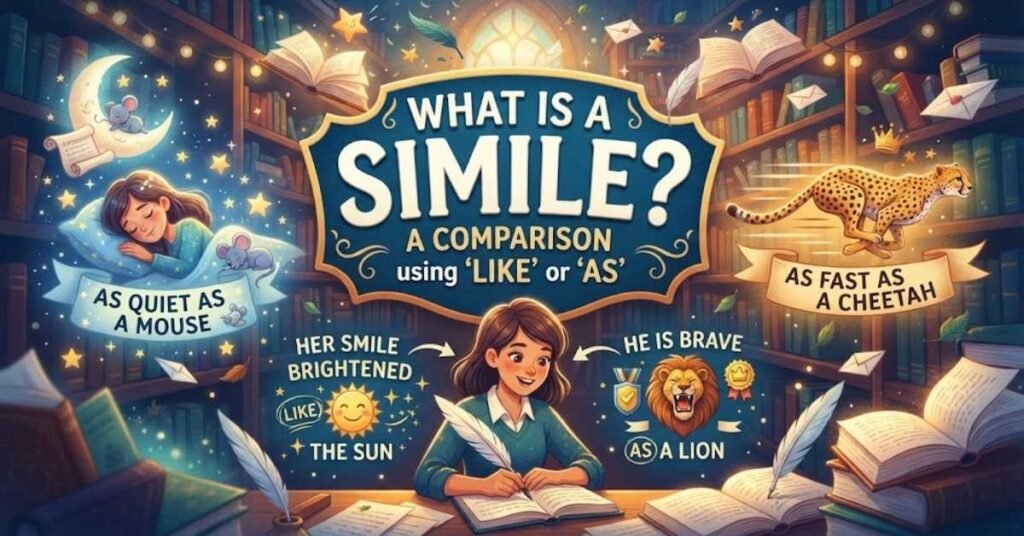
A simile is a figure of speech that compares two different things using “like” or “as.” It’s one of the simplest tools in creative writing, yet it does heavy lifting for emotional depth.
Instead of writing “she was happy,” you write “she was as happy as a lark.” Suddenly the reader sees it, feels it, almost hears the birdsong. That’s the power of vivid imagery.
People sometimes confuse similes with metaphors. A metaphor says one thing is another. A simile says one thing is like another. Small difference, big impact on tone.
26+ Similes for Being Happy
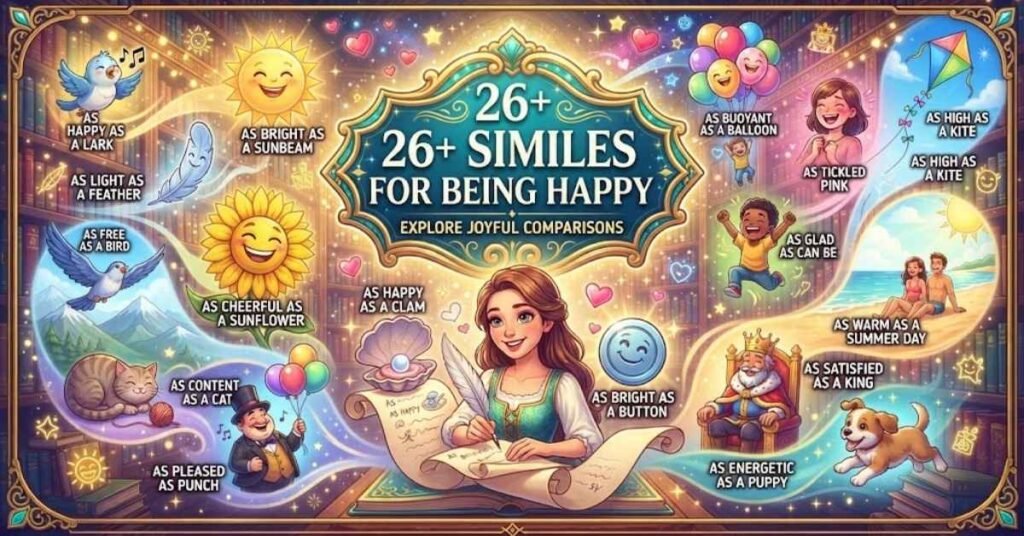
Below are more than two dozen ways to describe happiness without repeating yourself. Use them in poems, stories, essays, songs, or even your next caption.
As happy as a child on Christmas morning
This one captures pure, unfiltered excitement. Think wide eyes, torn wrapping paper, and that electric buzz before anyone’s even had breakfast.
It works great in stories about good news or surprise birthday gifts. Anytime someone gets something they’ve wanted forever, this comparison fits.
As happy as a lark
Larks sing early and often, which is why this phrase has stuck around for centuries. It suggests cheerfulness that feels natural, almost effortless.
Use it when a character is just naturally upbeat. No big event triggered it. They’re simply built that way.
As happy as a clam at high tide
Clams are safest and most comfortable when the tide’s in and covering them. This simile leans into contentment rather than excitement.
It’s perfect for beach vacation scenes or moments of quiet satisfaction. Someone doesn’t have to be jumping around to be genuinely happy.
As happy as a dog with two tails
An impossible image, which is exactly why it works so well. Two wagging tails means double the excitement, double the joy.
Save this one for scenes bursting with energy. It’s playful, a little silly, and instantly visual.
As happy as sunshine
Sunshine brings warmth, light, and a mood lift most people recognize instantly. This comparison works when you want to describe someone whose happiness seems to radiate outward.
It’s a favorite in poetry because it pairs so naturally with words like glow, warmth, and brightness.
As happy as a bird in spring
Spring brings singing birds, blooming trees, and a general sense of renewal. This simile captures happiness tied to fresh starts.
Great for stories about new beginnings, whether that’s a new job, a new relationship, or simply surviving a rough winter.
As happy as a lottery winner
Few feelings compare to the thrill of unexpected luck. This simile signals sudden, overwhelming happiness that catches someone off guard.
Use it for plot twists or moments when a character’s fortune flips instantly. The bigger the surprise, the better this one lands.
As happy as a blooming flower
A blooming flower opens slowly, revealing color and beauty over time. This simile suggests happiness that grows rather than happiness that hits all at once.
It’s ideal for character arcs where someone gradually finds their joy after a hard chapter.
As happy as a free bird
Freedom and happiness often travel together. This phrase works for anyone who just escaped a stressful situation or finally made a big decision.
Think graduation, quitting a job that drained them, or simply a worry-free weekend with nothing on the calendar.
As happy as a king
Comfort, pride, and success define this comparison. It’s less about wild excitement and more about a settled, satisfied kind of happy.
Use it when a character has everything they need and knows it.
As happy as a butterfly in a garden
Butterflies move light and free among flowers, never rushed, never stressed. This simile fits gentle, easygoing happiness.
It suits descriptions of peaceful settings where nothing dramatic happens, just quiet enjoyment.
As happy as a student on the last day of school
Anyone who’s counted down the days to summer break knows this feeling. It’s relief mixed with excitement, the promise of freedom after months of routine.
Great for school assignments, since students genuinely relate to this one.
As happy as a baby with a new toy
Innocence and delight combine here. Babies don’t overthink joy. They just feel it, completely and immediately.
Use this for moments of simple, uncomplicated happiness, the kind that doesn’t need a reason.
As happy as fireworks in the sky
Loud, bright, and impossible to ignore. This simile suits big celebration scenes where happiness practically explodes.
It’s a strong choice for climactic moments in stories, weddings, or New Year’s scenes.
As happy as a sunflower facing the sun
Sunflowers physically turn toward light. That’s optimism in its purest form, always facing the good stuff.
Use it for characters who choose positivity even during tough times. It says a lot without saying much.
As happy as a singer on stage
Performers often describe a rush that comes from applause and connection with an audience. This simile captures that specific high.
Fitting for scenes involving performers, recitals, or anyone finally getting recognized for their talent.
As happy as a fish in water
This phrase usually means someone’s perfectly suited to their environment. Comfortable, natural, completely at ease.
Use it when a character finally finds where they belong, whether that’s a job, a hobby, or a friend group.
As happy as a kite in the wind
Kites need wind to soar, and once they catch it, they seem weightless. This simile fits happiness tied to momentum and movement.
Great for festival scenes or outdoor settings where everything just clicks into place.
As happy as a winner holding a trophy
Victory after a hard-fought match brings a specific kind of pride. This simile works for sports stories or any competitive win.
It’s about earned happiness, the kind that comes after real effort.
As happy as a bride on her wedding day
Few days carry as much anticipation as a wedding. This simile fits happiness built on love, commitment, and long-awaited moments.
Works well after a proposal or during romantic storylines.
As happy as a camper with marshmallows
Simple pleasures matter. A campfire, good company, and marshmallows roasting slowly capture a relaxed, cozy kind of happy.
Perfect for outdoor scenes or stories about vacation and downtime.
As happy as a rainbow after rain
Rainbows show up right after storms, which makes them symbols of hope following difficulty. This simile suits happiness earned through hardship.
Use it when a character finally sees light after a rough patch of problems.
As happy as a kid in a candy store
Overwhelmed by choice and excitement, this simile captures childlike wonder. Think of walking into a shop full of sweets with nothing but options.
Works well for scenes involving abundance, whether that’s a mall trip or an unexpected windfall.
As happy as music in the air
Music has a way of lifting moods instantly. This simile fits happiness that feels light, floating, almost musical itself.
Great for lyrics, poems, or scenes where melodies set the emotional tone.
As happy as a star shining at night
Stars stand out precisely because they shine steadily in the dark. This simile suits quiet, persistent happiness that doesn’t fade.
Use it for characters who stay positive even when surrounded by difficulty.
As happy as a garden in full bloom
A garden in full bloom bursts with colorful flowers and life. This simile captures happiness that’s abundant, flourishing, and visible from every angle.
Perfect for describing a character at their absolute peak, everything finally coming together at once.
As happy as laughter at a party
Laughter at a party is contagious, unplanned, and genuine. This simile fits happiness shared among friends, the kind that spreads without effort.
Use it for group scenes where the mood is light and everyone’s simply enjoying each other’s company.
✨ Turn Joy into Art: Creative Ways to Use These Similes
Knowing the list is one thing. Actually using these similes well is another. Start by matching the comparison to the emotional tone you’re going for, since not every happy moment feels the same.
For poems and poetry, pick similes with strong sensory details, like sunshine, fireworks, or a garden in bloom. These create vivid imagery readers can practically see and feel.
For stories and essays, use similes that build character feelings gradually. A blooming flower or a bird in spring works well for character arcs that develop over several chapters.
For social media captions, keep it short and punchy. “As happy as a kid in a candy store” fits perfectly under a photo from a shopping trip or a fun outing with friends.
For songs and lyrics, rhythm matters as much as meaning. Choose similes that roll off the tongue naturally, like music in the air or a star shining at night.
Why Similes Matter More Than You Think
Good writing isn’t just about getting the message across. It’s about making readers feel something, and that’s where similes earn their keep.
Studies on descriptive writing consistently show that comparisons boost reader engagement more than flat, literal statements. People remember “happy as a lottery winner” longer than they remember just “very happy.”
There’s also a vocabulary benefit here. Writers who practice using similes naturally expand their range of expressive writing tools over time, which shows up in everything from school essays to professional copy.
Common Mistakes Writers Make With Similes
Overloading a paragraph with too many comparisons is a common trap. One strong simile beats three weak ones crammed into the same sentence.
Another mistake is choosing a comparison that doesn’t match the tone. Calling a somber character “happy as fireworks” during a quiet, reflective scene just feels off.
Finally, some writers force similes where they aren’t needed. If the sentence already works on its own, adding a comparison for the sake of it can dilute your creative expression instead of strengthening it.
How Similes Boost Creative Writing Skills
Practicing with similes trains your brain to notice connections between unrelated things, which sharpens observation skills over time. That habit carries over into every kind of writing you do.
Teachers often assign simile exercises because they build descriptive language fast. Students who practice comparisons regularly tend to write more engaging writing across every subject, not just creative pieces.
Even outside the classroom, professionals writing marketing copy, scripts, or blog posts benefit from this skill. A well-placed simile can turn a forgettable sentence into a memorable one.
Conclusion
Similes give language a pulse. They turn a plain “I’m happy” into something readers can picture, feel, and remember.
Whether you’re writing a poem, finishing a school assignment, or just captioning a photo, there’s a comparison here that fits. Pick a few, try them out, and watch your writing come alive.
FAQs
What are similes for being happy?
Similes for being happy are comparisons that use “like” or “as” to describe joy in a vivid, relatable way. Examples include “happy as a lark” or “happy as a child on Christmas morning.”
Why should I use similes in writing?
Similes add sensory details and vivid imagery to your writing, making emotions easier for readers to picture and connect with. They also improve engagement and make your work more memorable.
What is the difference between a simile and a metaphor?
A simile compares two things using “like” or “as,” while a metaphor states that one thing is another without those connecting words. Both are figures of speech, but they create slightly different effects.
Can similes improve creative writing skills?
Yes. Practicing with similes sharpens your ability to notice connections between ideas, which strengthens overall creative writing and descriptive writing skills over time.
Are similes good for students?
Absolutely. Similes help students build vocabulary, express emotions more clearly, and add color to school assignments, essays, and creative projects.

Mubeen is a passionate writer who shares simple and practical English grammar, vocabulary, and writing tips at ScoopVisly.